How do public-sector sharing initiatives scale beyond the pilot stage without failing financially or compromising public value?
By Michal Hron, Ben Roelens, Henk de Man, Theodoor van Donge, and Geert Poels
Ghent University, Tweekerkenstraat 2, 9000 Ghent, Belgium
Flanders Make@UGent, Tweekerkenstraat 2, 9000 Ghent, Belgium
Open Universiteit, Valkenburgerweg 177, 6419 AT Heerlen, The Netherlands
VDMbee, Schietboom 2, 3905 TD Veenendaal, The Netherlands
In our latest research collaboration—Business Ecosystem Modeling for the Scalability of Sharing-Economy Initiatives—co-authored with researchers from Ghent University, Flanders Make, and Open Universiteit, we explore how Continuous Business Model Planning (CBMP) can evaluate and structure complex multi-actor ecosystems.
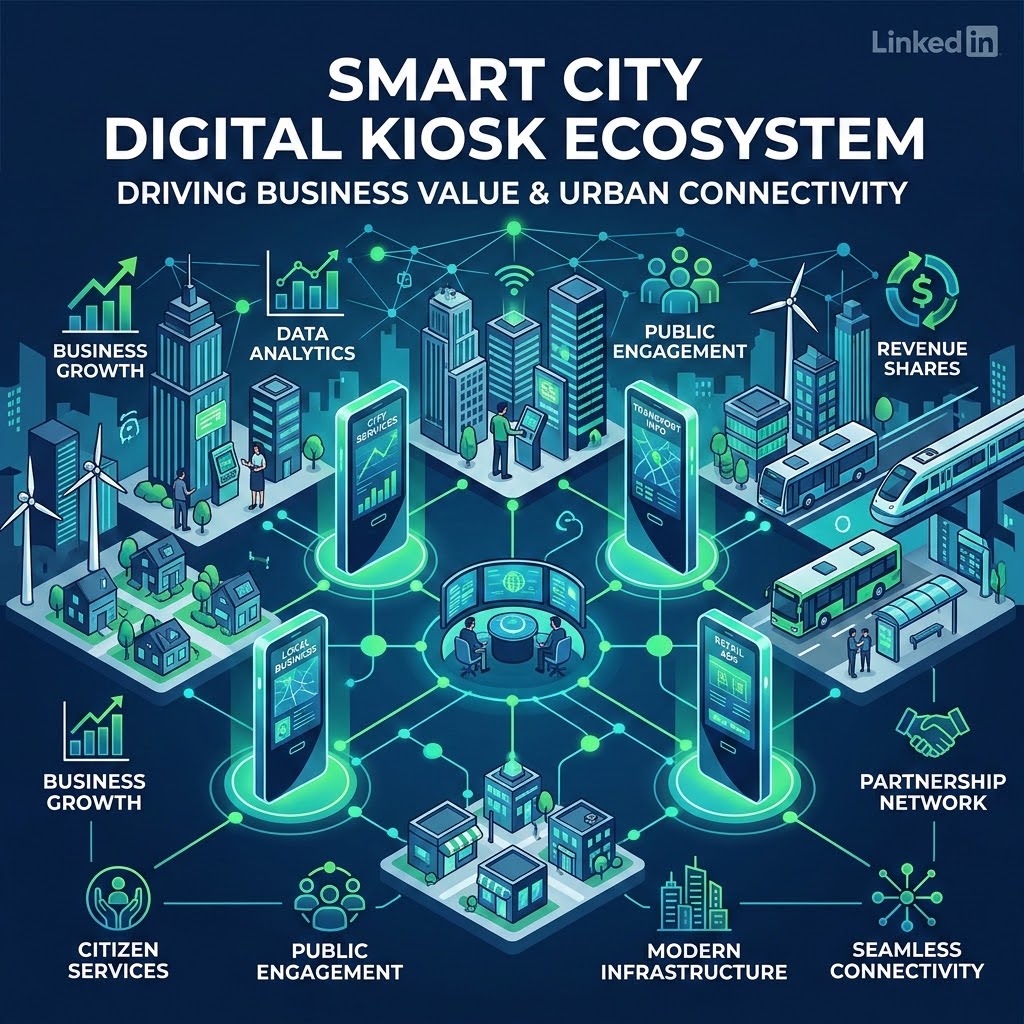
Using a real-world case study from the EU Interreg Digital Kiosks project (spanning 8 pilot organizations across 7 countries in the North Sea region), we modeled 16 ecosystem roles and 34 value exchanges to simulate three operating models over a 10-year horizon:
- Public Utility (City-managed)
- Public-Private Partnership (Shared governance & local partner operations)
- Fully Outsourced (Provider-managed service)
Key Takeaways:
- Balancing 3 Pillars of Value: Scaling readiness requires aligning economic viability with environmental impact and social cohesion.
- Ecosystem-Wide Visibility: Modeling the full value network reveals critical trade-offs between public mandate, financial sustainability, and user accessibility that standard single-firm models miss.
- Actionable Design Principles: The paper presents 4 practical design principles for applying business ecosystem modeling in multi-actor public-sector settings.
 Read the full case study summary and download the paper here: business-ecosystem-modeling-digital-kiosks